And other ways to overplay your favorite songs
There are five for sure. The count may be up to 20 who understand the term. The five of us describe this term with almost a gallows humor, having lived through the trauma.
Many people do the same thing, though they have different names for it. Late night show panelist Kat Timpf described it as squeezing the serotonin out of her favorite songs.
To squeeze the serotonin out of a song you play it over and over until the serotonin hit is no longer pulsing through your blood stream. And the thrill is gone, baby.
That’s an original way to talk about what many others call looping. Some would say you’re wearing it out, or burning the song on your brain. Others say it’s playing a song till it’s done to death. I like to imagine that one with an English accent, as in “Nigel, enough Careless Whispers. It’s been done to death!”
Sidewinding Serotonin
The term I alluded to is fondly called doing a “Johnny Cox.” In past tense, you “Johnny Cox’d” that song. If I said to my siblings, husband, and children that I Johnny Cox’d a song, they would know that I wrung it out.
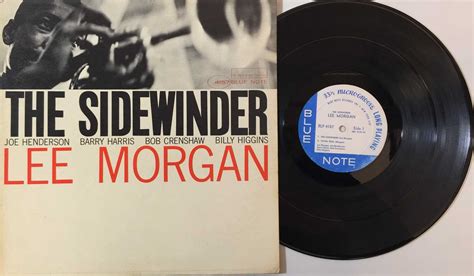
You cannot understand my dad’s serotonin squeezing without an introduction to Lee Morgan: He was a 25-year-old jazz trumpeter when he recorded the album The Sidewinder in 1964. In this tale, Morgan is the protagonist and The Sidewinder is a plot device, moving my dad’s five children to early onset moderate hearing loss. [I met my dad the same year The Sidewinder came out. I’m guessing it was a good serotonin year for him.]
My dad played The Sidewinder more times than I can count. Though there were five glorious, trumpety, jazzy songs on the album, the 10- minute, 25-second title song was his favorite.
And my dad squeezed the serotonin out of that song. He played it multiple times consecutively; that could easily translate into 41 and a half minutes of Sidewinder every time he got a hankering for it.
Some call it obsession or obsessive-compulsive disorder (OCD). (To which my siblings are saying “No kidding.”) Daniel Levitin wrote a book about this obsession called This Is Your Brain on Music: The Science of Human Obsession. Levitin is a “rocker-turned-neuroscientist” whose book delves into the particular emotional response that music stirs.
I did not read it yet and don’t know how well I’d understand the science. But I understand the emotion. I understand the obsession. I have years of stylus lifting to speak on that.
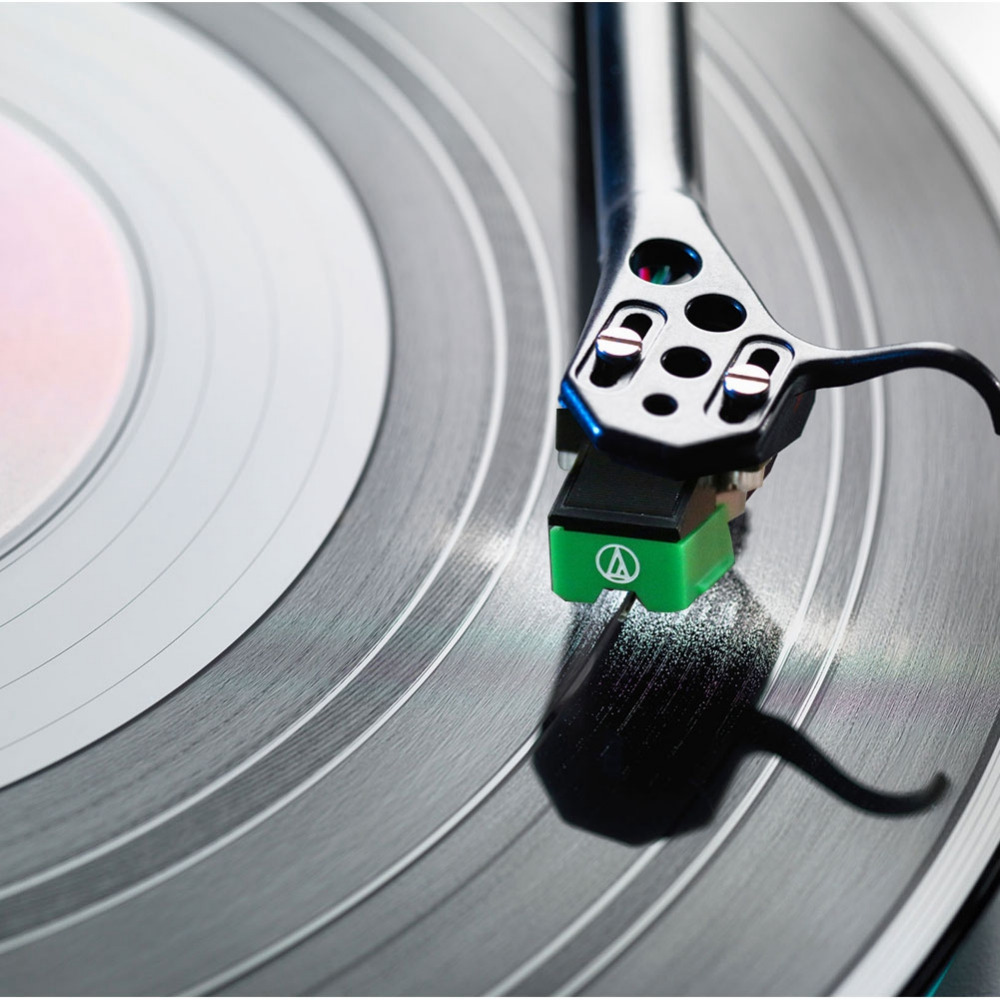
Okay, kids, there wasn’t a replay button to push when you replayed a song on an album. Instead you went to the stereo and lifted the stylus needle arm and placed it back to the song’s beginning groove. Based on the length of the Sidewinder, us kids had a chance to play an inning of kickball or build a snowman in between changes.
People my age will talk the lack of conveniences they had as kids, insinuating a measure of toughness: walking to school in the rain or snow, dialing on a rotary phone, rolling down a car window with crank, looking up info in an encyclopedia, and getting up to change the TV channel. But my siblings and I emceed our dad’s Sidewinder sessions. We wear that badge with pride. Our dad could support a family of seven working as a steel foundry manager. But he was incapable of moving a stylus.
An aside: if a tree falls in the woods and no one hears it, did it make a noise? On that vein I ask: If none of Dad’s five kids were around to move his stylus, did he play albums?
Dad squeezed a lot of serotonin out of a lot of songs. He sometimes commandeered his children’s albums if he liked them, playing his favorite songs over and over, wringing out the serotonin, dopamine, and endorphins out of every chord.
Serotonin is that wonderful little neurotransmitter that has complex, diverse functions such as mood, cognition, and reward. And vomiting. Sometimes you need to vomit.
According to Simply Psychology‘s website, serotonin is a neurotransmitter (or chemical messenger) produced within the central nervous system that contributes to feelings of happiness. They add that it’s also a hormone in the “enteric nervous system of the body, primarily found within the gastrointestinal tract (gut).” That probably explains the vomiting bit.
So can music affect your brain and gut? In American Pie Don McLean says “I can still remember how that music used to make me smile.
And I knew if I had my chance that I could make those people dance
And maybe they’d be happy for a while.” Billy Joel says as piano man his audience was “in the mood for a melody” and he’s got them feeling all right. So my question is valid.
Twenty years ago, when my husband was helping our daughter with a school project and I was out for the night, I came home to him saying “I Johny Cox’d Don’t Know Why I Didn’t Come tonight.” We had recently bought Nora Jones’ Come Away With Me CD. The funny thing is that when I heard that song I thought my dad, who had recently die, would really like it and Jones’ bluesy voice.
Now that my dad is gone, Johnny Cox’ing a song will only be understood by a handful of people. But then for most people a sidewinder is a short-range missile or venomous snake, not a jazz trumpet standard. But people will still do it because music is great and there’s science behind it.
Lee Morgan’s life ended in 1972 at 33 years. It was a classic blues story: He was shot by his common-law wife at Slugs’ Saloon in New York City during an altercation between sets while his band was performing. Talk about obsession!
As for me, I continue squeeze serotonin out of many songs I recently Johnny Cox’d Spirit of the Living God, a song we sing in church. It was wonderful! My neurotransmitters did their thing. My mood was lifted. And my gut.
Got 10 minutes to spare? Want to listen to The Sidewinder? Click on link.
 Unpacking My Adjectives